






DevOps & Cloud Services Company in India

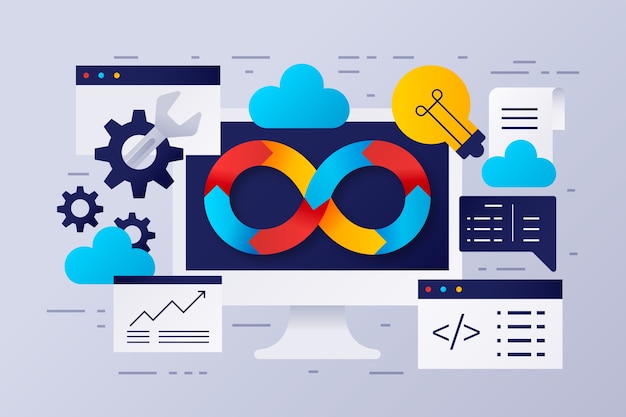
Most teams do not need a DevOps philosophy — they need releases that do not break, infrastructure they can reason about, and an alert when something goes wrong before a customer reports it. That is the work we do: automated pipelines, reproducible environments, and monitoring that tells you something useful.
We work mainly on AWS, and also with Vercel, Netlify and DigitalOcean where they are the better fit for a project's size. Infrastructure is defined in code so environments can be rebuilt rather than remembered.
DevOps services we provide
CI/CD pipeline setup
Automated build, test and deploy pipelines in GitHub Actions or GitLab CI, with separate staging and production paths and rollbacks that actually work.
Cloud infrastructure on AWS
EC2, ECS, S3, CloudFront, RDS and Lambda configured for the workload — sized for what the application does rather than for a template.
Containerisation and orchestration
Docker images and Kubernetes or ECS orchestration so an application runs the same way locally, in staging and in production.
Infrastructure as code
Terraform definitions for the whole environment, so infrastructure changes go through review and an environment can be recreated from the repository.
Monitoring and alerting
Uptime, performance, log aggregation and error tracking wired to alerts that reach a human, with dashboards for the metrics that matter to your product.
Cost and security review
Auditing cloud spend for unused and oversized resources, and reviewing IAM permissions, network exposure, secrets handling and backup policy.
Why DevOps Important ?
The practical case for DevOps is that deploying should be boring. When a release takes a day of manual steps, teams release less often, each release carries more change, and more goes wrong with it. The fix is to make the pipeline do the work: automated builds and tests on every commit, infrastructure defined in code rather than configured by hand, and monitoring that tells you a deployment went wrong before your customers do.
In practice that means CI/CD pipelines in GitHub Actions or GitLab CI, containers built with Docker and run on Kubernetes or a managed equivalent, and infrastructure described in Terraform or Ansible so an environment can be rebuilt rather than remembered. Observability is part of the same work — metrics and dashboards in Grafana and Prometheus, error tracking in Sentry, and alerts that point at a cause rather than just reporting that something is down. We also take on existing setups that have grown by accretion and need simplifying.
Technologies we work with
Cloud
- AWS
- DigitalOcean
- Vercel
- Netlify
Containers
- Docker
- Kubernetes
- Amazon ECS
Automation
- GitHub Actions
- GitLab CI
- Terraform
- Ansible
Observability
- CloudWatch
- Grafana
- Prometheus
- Sentry
How we work
Discovery
We work through your goals, users, constraints and budget, and review anything that already exists. You get a written scope and estimate before any build work starts.
Design & architecture
User flows, interface design and the technical architecture are agreed together, so the plan accounts for both what users need and what is practical to build.
Development
Work runs in short cycles with a demo at the end of each one. You see progress on a staging environment throughout rather than at the end.
Testing & release
Functional, regression and performance testing on real devices and browsers, then a staged release with monitoring in place from day one.
Support & iteration
Post-launch monitoring, fixes and a maintenance plan, plus a roadmap for the next set of changes based on how the product is actually used.
Frequently asked questions
Object Infotech offers consulting services to assess your organization's readiness for DevOps adoption, provides training for teams, and assists in the selection and implementation of DevOps tools and practices.
Key principles include continuous integration, continuous delivery, automation, collaboration, and monitoring, aimed at achieving faster delivery, higher quality, and improved feedback loops throughout the software development lifecycle.
Yes, we provide expert DevOps consulting services to help businesses adopt DevOps practices, optimize their development pipelines, and accelerate time-to-market for their software products.
Object Infotech offers ongoing support, training, and optimization services to ensure the continued success of DevOps implementations. We help teams adapt to changing requirements and continuously improve their DevOps practices.
The parts that pay off immediately at small scale are an automated deploy pipeline, a staging environment that matches production, and error monitoring. Kubernetes and multi-region architecture usually are not worth it yet. We scope to the size of the team and the traffic you actually have.
Yes. We start by documenting the current setup and its dependencies, stand up the target environment as infrastructure code, run both in parallel, then cut over with a tested rollback path. Migrations are planned around a low-traffic window with agreed downtime, if any is needed at all.
We offer retainers covering monitoring response, patching, scaling adjustments and periodic cost and security reviews. We can also set everything up and hand it over documented, if you would rather run it in-house.
Talk to us about your project
Tell us what you are building and we will come back with an approach, a timeline and a cost — not a brochure. Call +91 9898280084 or email info@objectinfotech.com.
Get in touch


PERFECT SOLUTION From It Advisor
+91 9898280084